How the Human Brain Works: Anatomy, Energy Use, and How to Support Cognitive Health
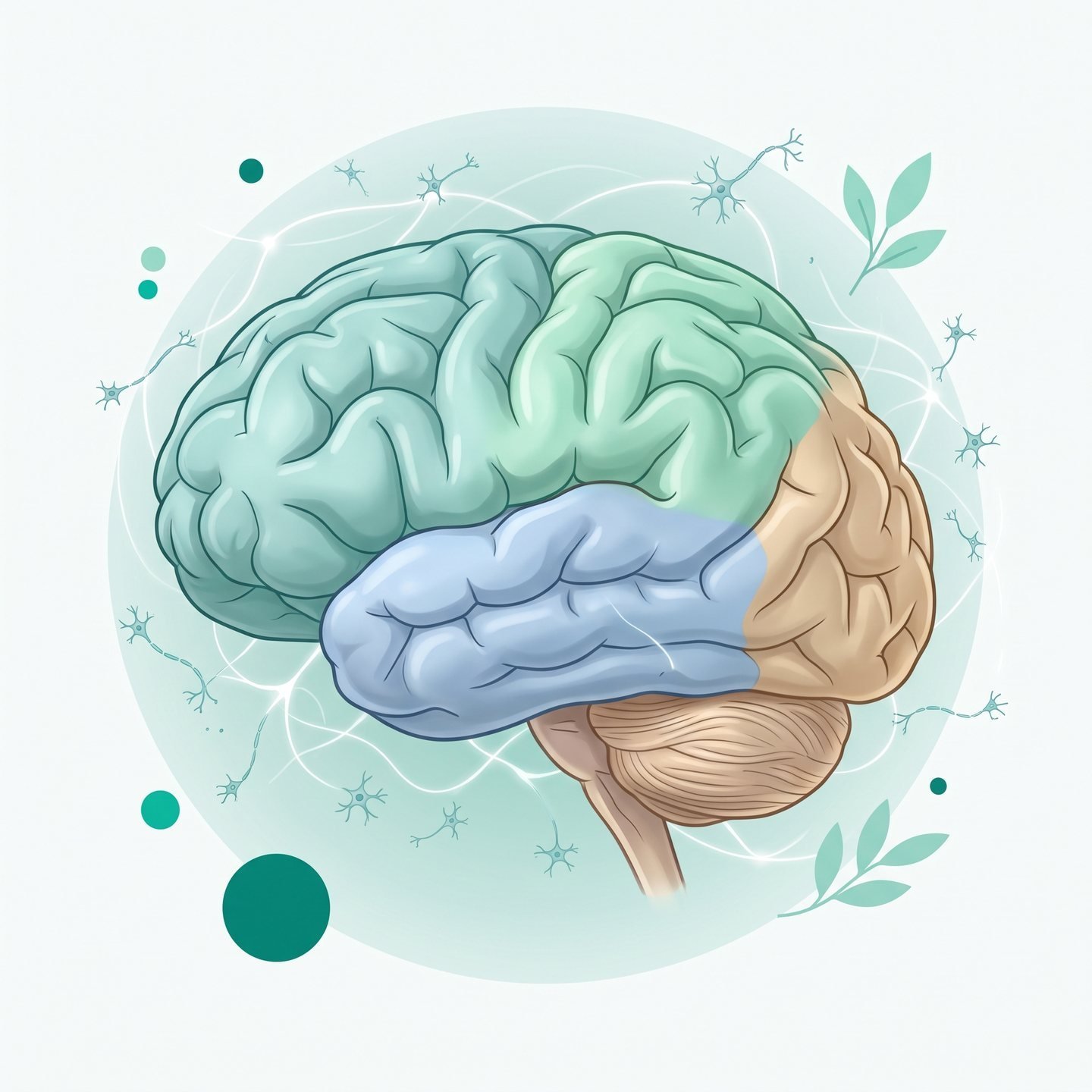
The human brain is a roughly 3-pound organ made of about 86 billion neurons that runs your entire body while consuming around 20 percent of your daily energy, even though it's only about 2 percent of your body weight. It processes sensory input, stores memories, coordinates movement, and regulates hormones through distinct regions like the frontal lobe, hippocampus, and brainstem, all wired together by trillions of synapses. Understanding how these parts work — and what actually supports them — helps you make better decisions about sleep, nutrition, and lifestyle habits that affect thinking and memory for the rest of your life.
The brain uses about 20% of your resting energy despite being only 2% of body weight, and it never really shuts off, even during sleep.
Four lobes handle different jobs: frontal (reasoning, planning), parietal (sensory processing), temporal (language, memory), and occipital (vision).
The hippocampus forms new memories and is unusually sensitive to poor sleep, chronic stress, and metabolic problems.
Neuroplasticity means the brain keeps changing at any age — but passive habits like scrolling or rewatching familiar shows don't drive it; novelty and challenge do.
Sleep, aerobic exercise, and blood flow have the strongest evidence for protecting cognitive function long-term; most single supplements have modest or mixed evidence on their own.
The vagus nerve links your gut to your hippocampus, which is one reason gut health and diet quality affect memory and mood.
What does each part of the brain actually do?
The brain has three main structural divisions — the cerebrum, cerebellum, and brainstem — and each cerebral hemisphere is split into four lobes with distinct jobs.
The four lobes of the cerebrum
The frontal lobe, located anterior to the central sulcus, is responsible for voluntary motor function, problem-solving, attention, memory, and language. The parietal lobe is located just underneath the parietal bone, lying posterior to the frontal lobe and controls feeling on the opposite side of body, ability to understand spoken language, and processing sensory information such as texture, temperature, and position in space. The temporal lobe also contains regions dedicated to processing sensory information, particularly important for hearing, recognising language, and forming memories, and the medial temporal lobe contains the hippocampus, a region of the brain important for memory, learning and emotions. The occipital lobe is the major visual processing centre in the brain.
The cerebellum and brainstem
The cerebellum, tucked underneath the occipital lobe at the very back of the brain, is the second-largest part of the brain in volume, containing over half the brain's neurons, and it coordinates voluntary movements and helps the brain learn new motor skills. Below it sits the brainstem, made of the midbrain, pons, and medulla. Your brainstem regulates many automatic body functions you don't consciously control, like your heart rate, breathing, sleep and wake cycles, and swallowing.
Deeper structures that matter for everyday health
Below the cortex sit several small but critical structures. The thalamus sits above the brainstem and acts as a switchboard, relaying sensory information to the cerebral cortex from the rest of the body. The hypothalamus, just below the thalamus, regulates hormones and autonomic functions like hunger and thirst, and the pineal gland, in the back of your corpus callosum, regulates your sleep and wake cycles. The amygdala processes fear and emotion, while the corpus callosum is the bridge of fibers connecting your two hemispheres so the "logical" and "creative" sides of the brain can actually talk to each other. If you want a deeper look at one specific communication line between body and brain, see our guide on the vagus nerve and its role in your nervous system.
Why does the brain use so much energy?
The brain is disproportionately expensive to run. Although it makes up only about 2 percent of an adult's body weight, it consumes approximately 20 percent of the body's energy at rest. Remarkably, it performs all of its tasks while consuming only about 20 watts of power — less electricity than many household light bulbs. Most of that budget doesn't go toward the hard thinking you notice yourself doing. About 75 percent is used for signaling — sending and processing electrical signals across the brain's circuits — while roughly a quarter goes toward basic cell maintenance.
Interestingly, effortful concentration barely moves the needle. Recent research estimating the metabolic cost of cognition concluded that effortful, goal-directed tasks use only about 5 percent more energy than restful brain activity — we use our brain just a small fraction more when focused than when it's idling. And the brain doesn't clock out at night: even when you're sleeping, the brain consumes roughly as much energy as it does during the day.
How many neurons does the brain have, and how do they communicate?
The brain contains roughly 86 billion neurons, which form a vast network with trillions of interconnections known as synapses. Neurons "talk" using both electrical impulses and chemical messengers called neurotransmitters — dopamine (reward and motivation), serotonin (mood), acetylcholine (memory and learning), and GABA (calming, inhibitory signaling) among the best known. Most of the brain's heavy energy spending happens at these synapses, not inside the cell bodies themselves.
Neuroplasticity: the brain's ability to rewire itself
Neuroplasticity is the brain's ability to change, grow, and adapt throughout life, enabling it to make new connections in response to learning, experience, and even injury. This is genuinely good news for anyone worried about age-related decline, but the type of activity matters. A study involving older adults showed that learning genuinely new skills, such as quilting or digital photography, increased memory and processing speed — but passive activities like talking, watching movies, and listening to music did not have the same effect. The more challenging and novel the task, the better it appeared to be for the brain.
Other reliably supportive habits include physical activity and sleep. Physical activity — both aerobic exercise and strength training — increases blood flow to the brain and reduces stress and inflammation. During sleep, the brain processes and stores information, clears out toxins, and repairs neural pathways, which is central to memory consolidation. If sleep is your weak link, our sleep protocol for deeper, faster sleep and the Sleep Patches are worth a look, and you can browse the broader sleep goal hub for other options.
How does the gut-brain (vagus nerve) connection affect memory?
One of the more surprising recent findings in neuroscience is how tightly memory formation is tied to signals coming up from the gut. Vagus nerve signaling, particularly from the GI tract, reduces anxiety and depressive-like behavioral symptoms, promotes motivated behaviors, and enhances learning and memory function, especially hippocampal-dependent memory. A 2026 study found that consuming nutritious foods triggers vagal nerve signaling to the hippocampus, increasing release of acetylcholine, a key neurotransmitter required for spatial learning and cognitive encoding. The flip side is concerning: chronic exposure to high-fat and high-sugar diets early in life permanently impairs vagal-hippocampal communication, providing a mechanistic link between junk food consumption, metabolic disorders, and cognitive decline.
This is part of why gut health and brain health are increasingly discussed together, and it's a good reason to explore our deep dive on the vagus nerve and the gut health goal page. Some readers also explore non-invasive vagal and cellular support tools like PEMF therapy, covered in more detail on our PEMF therapy hub.
Do omega-3s and other supplements really help brain function?
This is where the evidence gets more nuanced than marketing usually suggests. DHA is structurally important: DHA is a major structural lipid in the brain, particularly in neurons, contributing to membrane fluidity and functionality, and constitutes 15% of brain total lipids compared to under 5% in most other major organs. Observational data is encouraging — preclinical and prospective cohort studies have consistently reported that high DHA and EPA intake or status is associated with reduced risk of dementia, cognitive decline, and larger brain volumes.
But controlled trials in already-healthy older adults are less convincing. A 2023 systematic review concluded that available trials showed no benefit of omega-3 supplementation on cognitive function in cognitively healthy older people, and direct evidence on the effect of omega-3 on incident dementia is lacking. The honest takeaway: omega-3s support the raw material your brain is built from and may help people who are deficient or already at cognitive risk, but they're not a proven fix for a healthy brain that already gets enough. Other nutrients with mechanistic support include magnesium and B vitamins — B vitamins regulate homocysteine metabolism and facilitate neurotransmitter synthesis, magnesium modulates stress responses and NMDA receptor activity, and antioxidants and polyphenols counteract oxidative damage and improve cerebral blood flow.
If you want a fish-oil option, our Factor4 Advanced Inflammation Management combines fish oil with turmeric and CoQ10, and for the mineral side, Ultra Magnesium Complex uses the more absorbable glycinate and gluconate forms discussed further in our magnesium benefits guide. You can get the magnesium formula here if you decide to try it.
Brain regions and functions at a glance
Brain region | Primary role | What happens when it's under strain |
|---|---|---|
Frontal lobe | Voluntary motor function, problem-solving, attention, memory, and language | Poor planning, impulsivity, personality changes |
Parietal lobe | Identifying objects, spatial relationships, and interpreting pain and touch | Trouble with spatial awareness, sensory processing |
Temporal lobe | Hearing, recognising language, and forming memories | Language and memory difficulties |
Occipital lobe | Major visual processing centre in the brain | Visual disturbances |
Hippocampus | Memory, learning, and emotions | New memory formation is often the first thing to suffer |
Cerebellum | Coordinates voluntary movements and helps learn new motor skills | Poor coordination, unsteady gait |
Brainstem | Regulates heart rate, breathing, sleep-wake cycles, and swallowing | Life-critical; damage here is the most dangerous |
What are the biggest everyday risks to brain health?
The infographic's "risk" panel lists neurodegenerative disease, chronic stress, and poor sleep as top concerns, and the research backs this up. Chronic under-sleeping deprives the brain of its main housekeeping window, chronic stress keeps cortisol elevated in ways that are unkind to the hippocampus specifically, and a diet heavy in processed sugar and fat appears to blunt the gut-vagus-hippocampus signaling pathway described above. Practical, low-cost defenses include:
Prioritize 7–9 hours of sleep most nights, since this is when memory consolidation and toxin clearance happen.
Move your body daily. Aerobic exercise increases blood flow to the brain and is one of the most consistently supported habits for cognitive health.
Do something genuinely new, not just familiar puzzles — novelty is what drives plasticity.
Eat a nutrient-dense diet with adequate omega-3s, B vitamins, and magnesium rather than relying on any single "brain pill."
Manage chronic stress since the hippocampus is unusually sensitive to prolonged high cortisol.
For a broader gut-check on your own habits across sleep, diet, activity, and supplements, our free AI health assessment can turn your answers into personalized suggestions, and the brain and memory goal hub rounds up more targeted options.
Frequently asked questions
How many neurons does the human brain have?
The brain contains roughly 86 billion neurons, which form a vast network with trillions of interconnections known as synapses. Just over half of those neurons are actually packed into the cerebellum, which handles movement and coordination rather than conscious thought.
Why does the brain use so much energy even at rest?
Because your brain never shuts off — even when you're sleeping at night, the brain consumes roughly as much energy as it does during the day. Most of that energy pays for constant background signaling and cell maintenance rather than the specific task you're focused on.
Can you actually grow new brain connections as an adult?
Yes. Neuroplasticity means it's never too late to improve your memory, boost your focus, or learn a new skill, but the activity needs to be genuinely challenging and new to you, not a passive or overly familiar task.
Do fish oil supplements improve memory?
The evidence is mixed. DHA is a core structural fat in brain cell membranes, but available randomized trials showed no benefit of omega-3 supplementation on cognitive function in cognitively healthy older people. Omega-3s may matter more for people who are deficient or already at elevated cognitive risk than for a healthy brain getting adequate intake already.
What is the vagus nerve's role in brain health?
The vagus nerve carries signals between the gut and the brain, and this signaling reduces anxiety and depressive-like symptoms, promotes motivated behaviors, and enhances hippocampal-dependent learning and memory. Poor diet quality over time appears to weaken this communication line, which is one proposed link between metabolic health and memory decline.
What's the single most protective habit for long-term brain health?
No single habit outperforms the combination, but consistent sleep and regular aerobic exercise have the strongest, most repeated evidence. Physical activity increases blood flow to the brain and reduces stress and inflammation, while adequate sleep is when the brain does its memory consolidation and cleanup work.
Sources
Britannica – The Human Brain Runs on Less Power Than a Light Bulb
Johns Hopkins Medicine – Brain Anatomy and How the Brain Works
Neuroscience News – Vagus Nerve Gut Signals Drive Spatial Memory
Cochrane review – Omega-3 for prevention of cognitive decline and dementia
This article is for education and is not medical advice.
Share this